Entourage effect in cannabis consumption
List of contents
If you’ve been around the cannabis world for a while, you’ve probably heard things like: “this strain hits differently because of the terpenes” or “it’s not just THC, it’s the whole package”. That idea is known as the entourage effect, the possibility that multiple compounds in the plant work together and make the experience different from that of an isolated cannabinoid. In this post, we’ll explain it without smoke and mirrors: what it really means, what science says, why it’s sometimes exaggerated, and how you can use this information to better understand the differences between genetics.
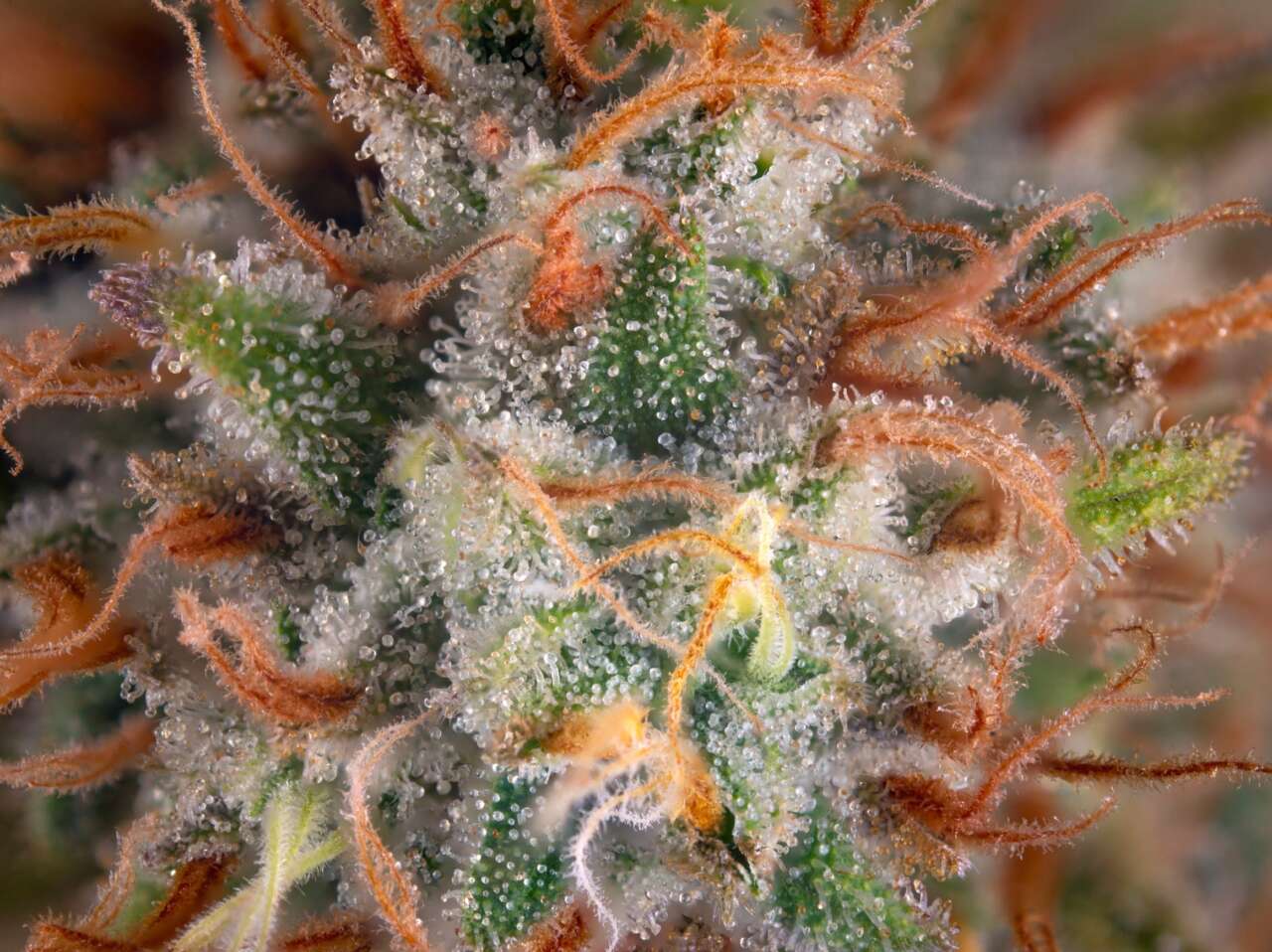
What is the entourage effect?
When we talk about cannabis, we’re not talking about a single molecule; we’re talking about a natural mix of compounds. The most well-known are cannabinoids (such as THC and CBD) and terpenes (responsible for aroma), along with other components present in smaller amounts.
It’s important to understand that the entourage effect does not automatically mean “stronger.” Many times, it means more nuanced or simply different.
Where does the idea come from?
The term entourage effect was first used to describe a phenomenon related to the endocannabinoid system (the body’s natural system that interacts with cannabinoids), where certain “companion” molecules could enhance the activity of a main compound in an experimental model. That work is one of the scientific starting points of the concept.
From there, the concept was applied to whole-plant cannabis, and authors such as Ethan Russo suggested that combinations of cannabinoids and terpenes could generate synergies that explain why some extracts or profiles feel different from isolated compounds.
Which compounds make up the entourage effect?
Cannabinoids
- THC: the main compound responsible for psychoactive effects.
- CBD: not psychoactive like THC and may influence how effects are perceived in some people.
- Minor cannabinoids: such as CBG, CBN, CBC, THCV… usually present in lower amounts, but they may add nuance.
Put simply: when you change the cannabinoid balance, the experience often changes more than with almost any other factor.
Terpenes
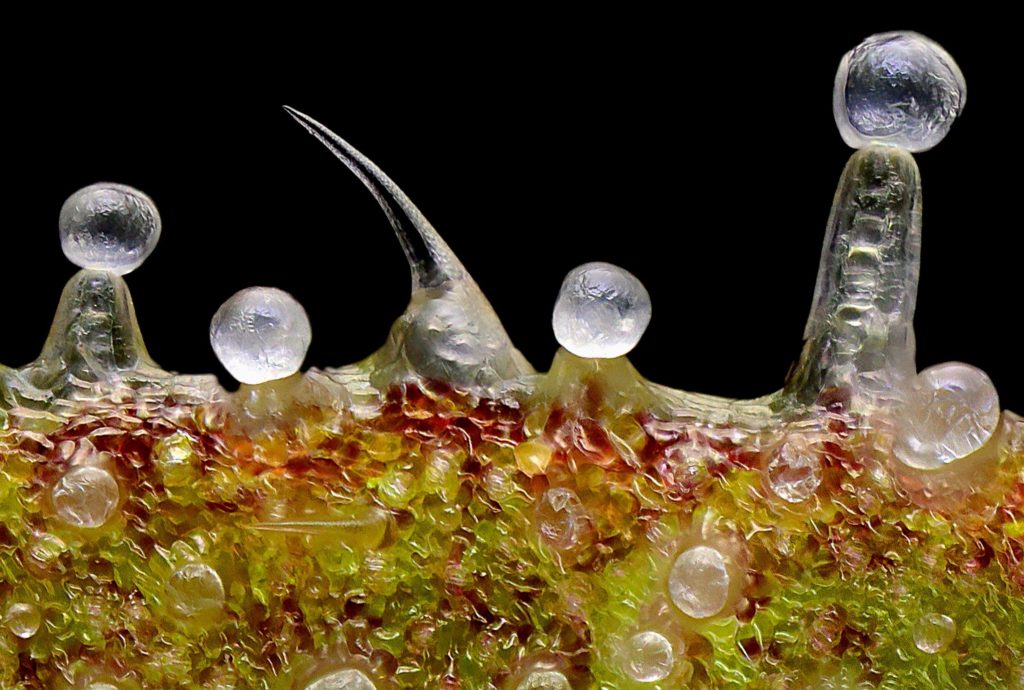
Terpenes give cannabis its “citrus,” “pine,” “floral,” “diesel,” or “sweet” profiles. The most common ones in cannabis include myrcene, limonene, pinene, linalool, and β-caryophyllene.
The key point is this: although terpenes have documented biological activity in other contexts, the real debate in cannabis is whether, at typical doses, they can modulate the effects of THC in humans.
The entourage effect in practice
When someone says “this genetic feels different,” several things may be happening. The entourage effect is often used to explain differences in the type of effect, tolerance, duration, and the clarity or heaviness of the experience.
But beware: not everything is the entourage effect. Sometimes differences come from dosage, tolerance, route of consumption, etc.
The scientific data
There are laboratory studies where some terpenes, combined with THC, appear to increase signals associated with the CB1 receptor (one of the main “gateways” for THC in our body). This suggests that, at least under controlled conditions, interactions may exist.
There are also studies that do not find terpenes mediating an entourage effect through CB1/CB2 receptors under their experimental conditions. In other words: the phenomenon does not always appear when measured directly.
Several critical reviews point out a key issue: the entourage effect is frequently mentioned, but often without specifying which compounds, at what doses, and with what outcomes—making it easy for the concept to become a marketing label.
Translated into grower language, this means that some combinations probably work better than others, but you can’t simply say “it has limonene = it’s stimulating” as a fixed rule.
Why it’s important to understand the entourage effect
At a seed bank like Philosopher Seeds, talking about the entourage effect in a useful way means one thing: looking at the full profile.
Two genetics may have similar THC levels and still feel different due to differences in:
- THC/CBD balance
- presence of minor cannabinoids
- aromatic profile (dominant and secondary terpenes)
- ripening, drying, and curing (which can change the final profile)
That’s why, if your goal is to choose better based on the type of experience, the smartest approach is:
- not obsessing only over THC percentage
- using aroma as a clue, not a verdict
- repeating conditions (same dose and same route) to compare
- observing sensations methodically: onset, peak, duration, clarity, body, mood
To wrap up
The entourage effect is an elegant way of saying something quite realistic: cannabis is more than THC. Science suggests that interactions between compounds may exist (and some are already observed in controlled models), but it also shows mixed results—especially regarding the exact role of terpenes and their impact on humans.
Used thoughtfully, it helps you choose and evaluate genetics with a more complete perspective: aroma, effects, nuances, and personal experience.
Specialized sources
- Ben-Shabat et al. (1998) – origin of the term “entourage effect” in the endocannabinoid system.
- Russo (2011) – proposal of cannabinoid-terpene synergies in cannabis.
- Finlay et al. (2020) – negative results for terpene-mediated effects via CB1/CB2 in their model.
- Mechanistic study (2023) – selected terpenes and increased CB1 activation with THC in laboratory settings.
- Scoping review (2023) – critical review of the use of the “entourage” concept.
- Pharmaceuticals (2024) – broad review of the entourage effect in medicinal products.