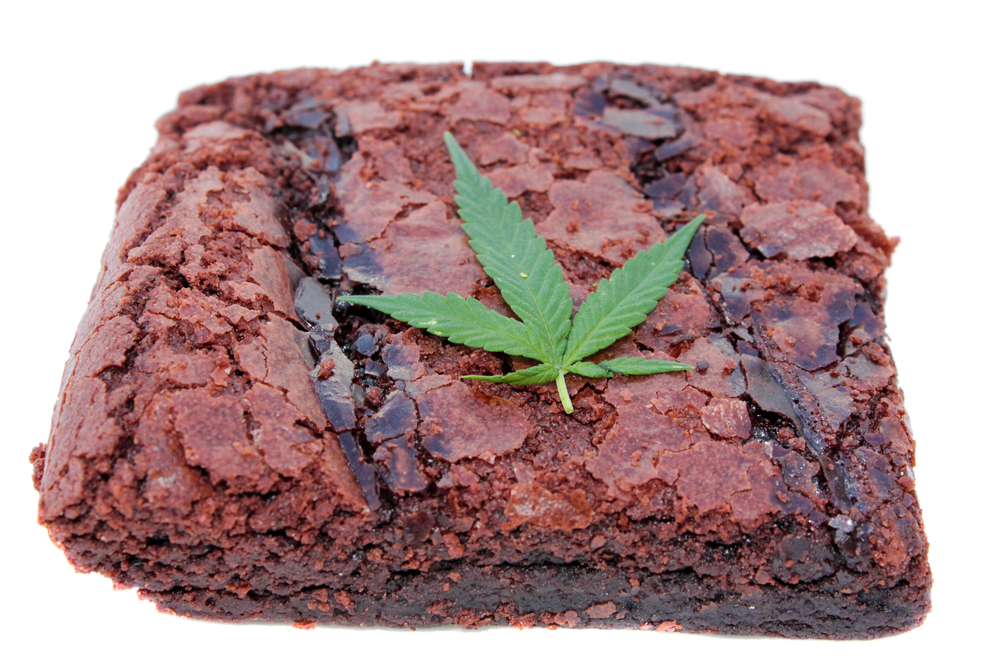
How to make a marijuana brownie
Mary Jane Rathbun, known as Brownie Mary, distributed cannabis brownies to AIDS patients in San Francisco during the 1980s, playing a key role in the legalisation of medical cannabis in California in 1996.
The process requires decarboxylation, heating the ground cannabis at 110-120°C for 30-45 minutes to activate the THC. Dosage is critical as ingested THC is converted in the liver into 11-hydroxy-THC, 2-3 times more potent than when smoked. It is recommended to start with 1-2.5mg for beginners and 10mg as a standard dose.
The preparation consists of making cannabutter by infusing butter with decarboxylated cannabis, then preparing traditional brownies by baking at 175-180°C for 20-30 minutes. The effects take between 30 minutes and 3 hours to appear and last 6-12 hours, being much more intense than smoking.
It is essential to clearly label edibles, keep them out of reach of children and not combine them with alcohol. There is no lethal risk from overdose but the experience can be very unpleasant. Brownies keep for 1 week at room temperature, 2-3 weeks refrigerated or 3 months frozen.
Cannabis brownies represent much more than a simple cannabis-infused dessert — they are a symbol of resistance and compassion born on the streets of San Francisco during one of the most devastating health crises of the twentieth century.
Mary Jane Rathbun, known as "Brownie Mary", revolutionised the perception of medicinal cannabis in the 1980s. Working as a volunteer on Ward 86 of San Francisco General Hospital, the country's first clinic dedicated to AIDS, this grandmother-like woman handed out hundreds of cannabis brownies to patients suffering the devastating effects of the disease and its treatments.
In 1996, California passed Proposition 215, legalising medicinal marijuana in the state. Brownie Mary was a key player in this legislative victory that paved the way for legalisation across the country. Her brownie recipe remained a secret until the day she died in 1999, but her legacy inspired an entire industry of cannabis edibles.
With this post we want to honour her legacy with this brownie recipe inspired by hers.
Decarboxylation of marijuana: an essential step
Cannabis in its natural state mainly contains cannabinoids in their acid form: THCA (tetrahydrocannabinolic acid) and CBDA (cannabidiolic acid). These molecules are not psychoactive and require a chemical process called decarboxylation to convert into THC and CBD, the compounds that produce the therapeutic and recreational effects we are looking for.
Decarboxylation is a chemical reaction that occurs when we apply heat to cannabis, removing a carboxyl group (COOH) from the molecular structure and converting THCA into active THC. This process happens automatically when we smoke or vaporise cannabis, but in cannabis cooking we need to trigger it consciously before incorporating the plant into our recipes.
The optimal temperature for decarboxylation ranges between 104°C and 120°C over a period of 30 to 45 minutes. Exceeding 150°C or maintaining temperatures above 120°C for more than an hour can degrade the resin, significantly reducing the potency and aroma of the final product.
Scientific research has shown that when we ingest THC, our liver metabolises it and converts it into 11-hydroxy-THC, a metabolite 2 to 3 times more potent than the delta-9-THC we absorb when smoking. This compound crosses the blood-brain barrier more easily, producing more intense and long-lasting effects that can extend between 4 and 12 hours.
Dosage: finding the desired effect
Dosing cannabis edibles is an exact science that requires an understanding of percentages, unit conversion and basic arithmetic. A miscalculation can result in an unpleasant or even frightening experience for the consumer.
The basic formula for calculating THC content is as follows: multiply the THC percentage of your buds (expressed as a decimal) by 1000 to get the milligrams of THC per gram of cannabis. For example, if your cannabis has 16% THC, the calculation would be 0.16 × 1000 = 160 mg of THC per gram.
Legal cannabis markets set 10 mg of THC as the standard dose for edibles, but this amount may be too much for beginners. Dosage guides recommend starting with microdoses of 1 to 2.5 mg for inexperienced users, low doses of 2.5 to 5 mg for mild effects, moderate doses of 10 to 15 mg for regular consumers, and high doses of 20 to 50 mg for users with a developed tolerance.
To calculate the dosage for a full recipe, add up the total THC from all the cannabis used and divide by the desired number of portions. If you use 10 grams of cannabis with 18% THC (1800 mg total) to make 20 brownies, each brownie will contain approximately 90 mg of THC — a considerably high dose that should be divided into smaller portions.
It is essential to remember that the effects of edibles take between 30 minutes and 3 hours to kick in, reaching peak intensity between 1 and 3 hours after ingestion. This prolonged onset is the main cause of accidental overconsumption when users take more before feeling the initial effects.
Step 1: decarboxylation of cannabis
Decarboxylation is the critical first step that determines the final potency of your brownies. This process must be carried out with precision and patience.
Materials needed:
- 1 to 2 grams of dried cannabis flowers (enough for 4 to 8 portions depending on tolerance).
- Cannabis grinder.
- Baking tray.
- Baking paper or parchment paper.
- Oven thermometer (recommended for accuracy).
Preheat the oven to 110°C and make sure the temperature is stable. Domestic ovens can have temperature variations of up to 15°C, so an oven thermometer is highly recommended.
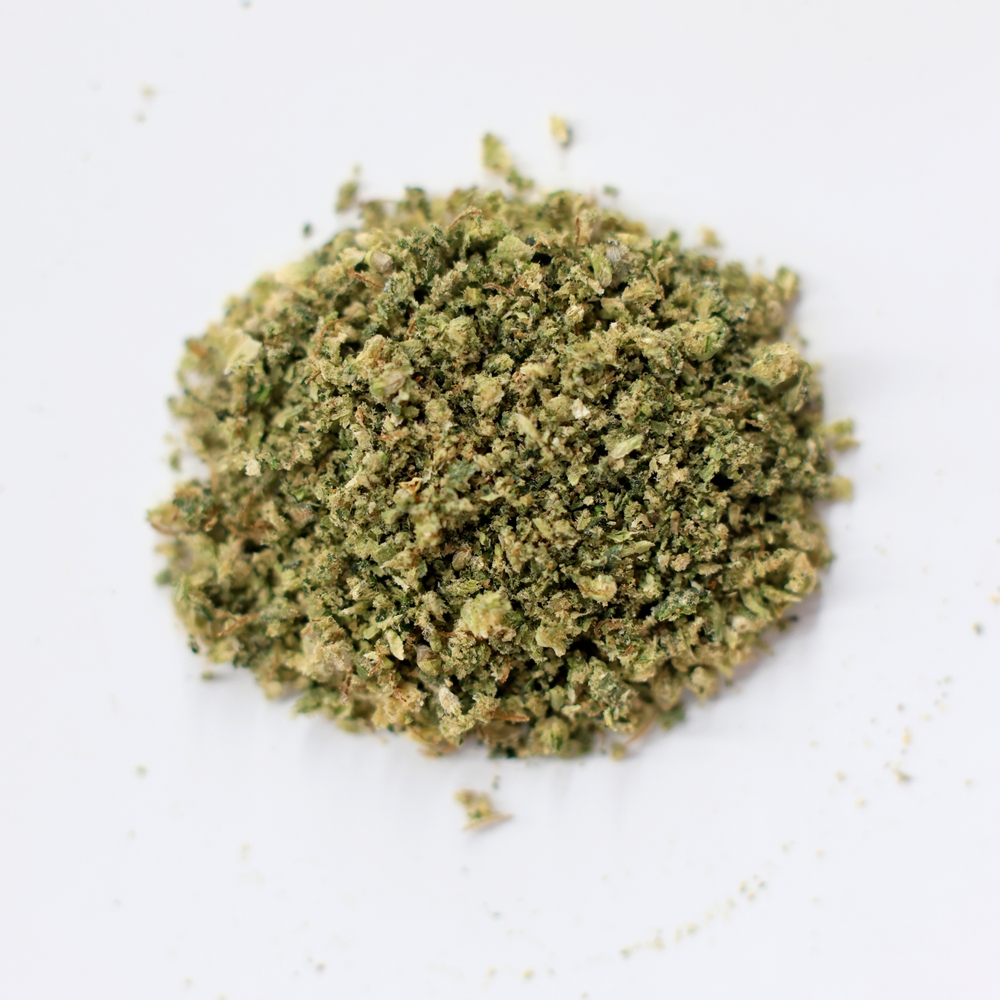
Grind the cannabis evenly using a grinder. The grind should be fine but not powdery, similar to the texture of dried oregano. An even grind ensures that all the material decarboxylates homogeneously.
Spread the ground cannabis in an even layer on the tray lined with baking paper. Avoid piling up the material, as this can result in uneven decarboxylation.
Bake for 30 to 45 minutes, stirring gently every 10 minutes to ensure even exposure to heat. Properly decarboxylated cannabis will have a golden brown colour and a more intense aroma than fresh cannabis.
Remove from the oven and allow to cool completely before proceeding to the next step. Hot cannabis can degrade if immediately exposed to more heat during the butter preparation.
Step 2: preparing cannabis butter (cannabutter)
Cannabis butter is the vehicle that carries cannabinoids through your recipe. Cannabinoids are fat-soluble, meaning they dissolve in fats but not in water. This chemical principle makes butter the perfect medium for extraction.
If you don't know how to make it yet, visit our post on how to make cannabis butter:
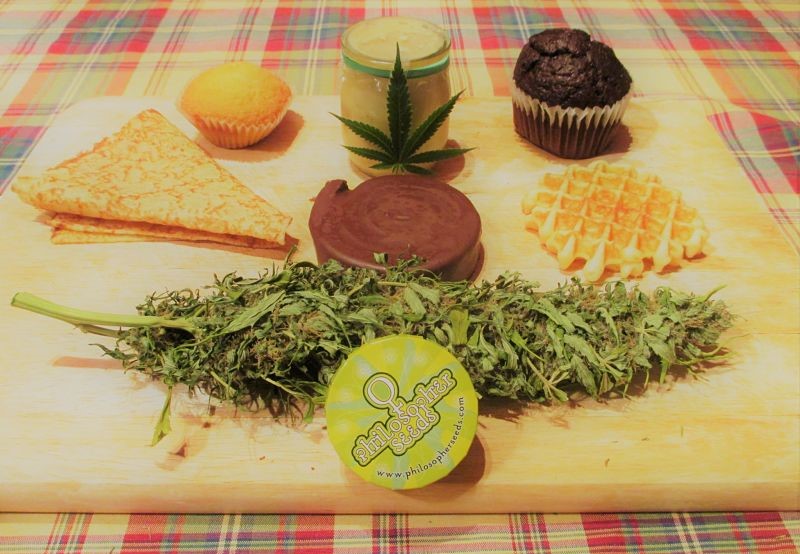
Cannabutter is the main ingredient of cannabis desserts and sweets, it can be eaten alone on toast or as a base ingredient in biscuits, cakes or cannabis candies. Along with some tips on its consumption, in 5 easy steps we show you how to make cannabis butter, an easy recipe to make that will delight all cannabis users.
Step 3: making the marijuana brownies
With the cannabutter ready, the brownie-making process follows the principles of any traditional baking recipe, with special attention to not exceeding temperatures that could degrade the cannabinoids.
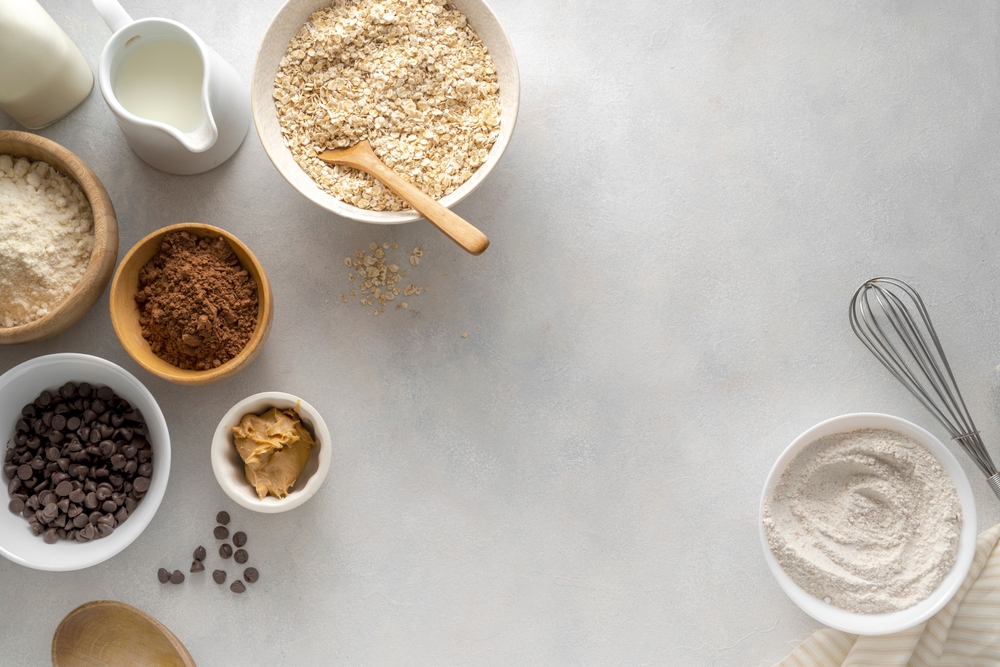
Ingredients for 8 to 12 portions:
- 90 grams of cannabutter.
- 200 grams of white or brown sugar.
- 2 large eggs at room temperature.
- 1 teaspoon of vanilla extract.
- 100 grams of plain flour.
- 50 grams of unsweetened cocoa powder.
- 1/2 teaspoon of baking powder.
- 1/4 teaspoon of salt.
- 100 grams of chopped dark chocolate or chocolate chips (optional).
- 50 grams of chopped walnuts (optional).
Step-by-step preparation:
Preheat the oven to 175°C–180°C. This temperature is sufficient to bake the brownie without significantly degrading the cannabinoids. Although some THC may convert during baking, the loss is minimal if the baking time is kept under control.
Grease a 20 × 20 cm or 23 × 23 cm tin with regular butter or cooking spray, and line with baking paper leaving an overhang on the edges to make it easier to remove later.
Melt the cannabutter in a bain-marie or in the microwave on low power. Avoid overheating it, as temperatures above 120°C can start to degrade the cannabinoids.
In a large bowl, beat the melted cannabutter with the sugar until you get a smooth, homogeneous mixture. Add the eggs one at a time, beating well after each addition, then incorporate the vanilla extract.
In a separate bowl, sift together the flour, cocoa powder, baking powder and salt. Sifting is important to avoid lumps and ensure a smooth texture in the final product.
Gradually fold the dry ingredients into the wet mixture, stirring with gentle folding movements until just combined. Over-mixing can develop the gluten and result in tough brownies.
If you are using chopped chocolate or walnuts, add them at this point and fold gently to distribute them evenly through the batter.
Pour the mixture into the prepared tin and spread it evenly with a spatula. Tap the tin gently against the counter several times to release any trapped air bubbles.
Bake for 20 to 30 minutes. The exact time will depend on your oven and the thickness of the batter. The brownies are ready when a toothpick inserted in the centre comes out with a few moist crumbs but no liquid batter. Remember that the brownies will continue to cook slightly from the residual heat after removing them from the oven.
Remove from the oven and allow to cool completely in the tin before cutting. Full cooling can take 1 to 2 hours and is crucial for the structure to set and for the cannabinoids to distribute evenly.
Considerations on effects and responsible consumption
The effects of marijuana brownies differ radically from smoking or vaporising cannabis. This difference is not only quantitative but qualitative, due to the metabolic processes involved.
When you consume marijuana, the THC must pass through the digestive system and be metabolised by the liver before entering the bloodstream. This "first hepatic pass" process converts delta-9-THC into 11-hydroxy-THC, a significantly more potent metabolite with a greater affinity for the cannabinoid receptors in the brain.
The onset of effects can vary between 20 minutes and 3 hours depending on multiple factors: individual metabolism, stomach contents, body fat percentage, prior cannabis tolerance and the potency of the edible. The peak of intensity generally occurs between 1 and 3 hours after ingestion, and the effects can persist for between 6 and 12 hours in total.
If you experience a THC overdose from edibles, symptoms may include: intense anxiety, paranoia, nausea, dizziness, rapid heartbeat, confusion and disorientation. Although there is no risk of a fatal cannabis overdose, the experience can be extremely unpleasant. In these cases, mitigation strategies include: drinking plenty of water, eating food, resting in a calm and safe environment, and remembering that the effects are temporary and will pass.
Storage and preservation
Cannabis brownies should be stored properly to maintain their potency and freshness. Cannabinoids are sensitive to light, heat and oxygen — factors that can degrade them over time.
For short-term storage (up to 1 week), keep the brownies in an airtight container at room temperature in a cool, dark place. For longer periods, refrigeration can extend the shelf life to 2 to 3 weeks.
Cannabis brownies can also be successfully frozen for up to 3 months. Wrap them individually in cling film and then in aluminium foil before placing them in a zip-lock freezer bag. To consume, defrost at room temperature for several hours.
It is essential to clearly label any cannabis edible to prevent accidental consumption, especially in households with children or visitors. Use visible labels indicating "CONTAINS MARIJUANA" along with the date of preparation and the approximate dose per portion.
Variations and alternatives
The basic cannabis brownie recipe lends itself to numerous variations to suit different dietary needs and flavour preferences.
For vegan versions, replace the eggs with 2 "flax eggs" (2 tablespoons of ground flaxseed mixed with 6 tablespoons of water) and use cannabis-infused coconut oil instead of cannabutter. Coconut oil has similar properties to butter for cannabinoid extraction and is entirely plant-based.
For gluten-free versions, replace the plain flour with a gluten-free flour blend or almond flour. Bear in mind that alternative flours can alter the texture, so it may be necessary to adjust the amount of liquid in the recipe.
If you want to mask the herbal flavour of cannabis, consider adding ingredients with bold flavours such as espresso, mint extract or peanut butter, or increase the amount of chocolate in the recipe. High-quality dark chocolate (70% cacao or more) is particularly effective.