Use of companion plants in cannabis cultivation
List of contents
Growing cannabis as a monoculture is the norm in most gardens, both indoors and outdoors. However, from an ecological perspective, this model is far from optimal: it progressively depletes the soil, encourages the proliferation of pests and pathogens, and disrupts the biotic balances that nature has taken millions of years to build.

Companion planting, known internationally as companion planting, is a technically well-founded response to this problem. It is neither a new trend nor a fad: its roots go back to the earliest days of agriculture, and today it is supported by a growing body of scientific literature validating its mechanisms of action.
This article offers a technical and educational review of the fundamentals of companion planting, applied specifically to home cannabis growing, from the ecological principles underpinning it to the most relevant species and the mechanisms involved.
Ecological Foundations.
A cannabis monoculture presents ideal conditions for pests and diseases to spread rapidly, featuring high host density, genetic homogeneity and an absence of physical or chemical barriers of plant origin. In practical terms, this translates into lower pest incidence and reduced dependence on synthetic chemical pesticides.
In parallel, plant biodiversity increases soil biodiversity. A varied set of roots with different morphologies and depths creates a more complex microhabitat for the soil microbial community, resulting in greater enzymatic activity, better nutrient utilisation and greater resilience against pests and diseases.
The Rhizosphere as the Core of Cannabis Growing.
Any serious analysis of companion planting must begin underground, in the rhizosphere. This term refers to the layer of soil surrounding the roots, whose biology and chemistry are profoundly shaped by root exudates. In the rhizosphere, fungi, bacteria, protozoa, nematodes and other organisms coexist, maintaining a network of mutualistic interactions of enormous complexity.
Among the most relevant microorganisms for the cannabis grower are mycorrhizal fungi. These fungi establish mutualistic symbioses with more than 80% of terrestrial plant species. The plant transfers up to 20% of the carbohydrates produced through photosynthesis to the fungus, which in return extends a network of hyphae up to several metres long, capable of exploring soil volumes inaccessible to roots. For more information, visit our post:
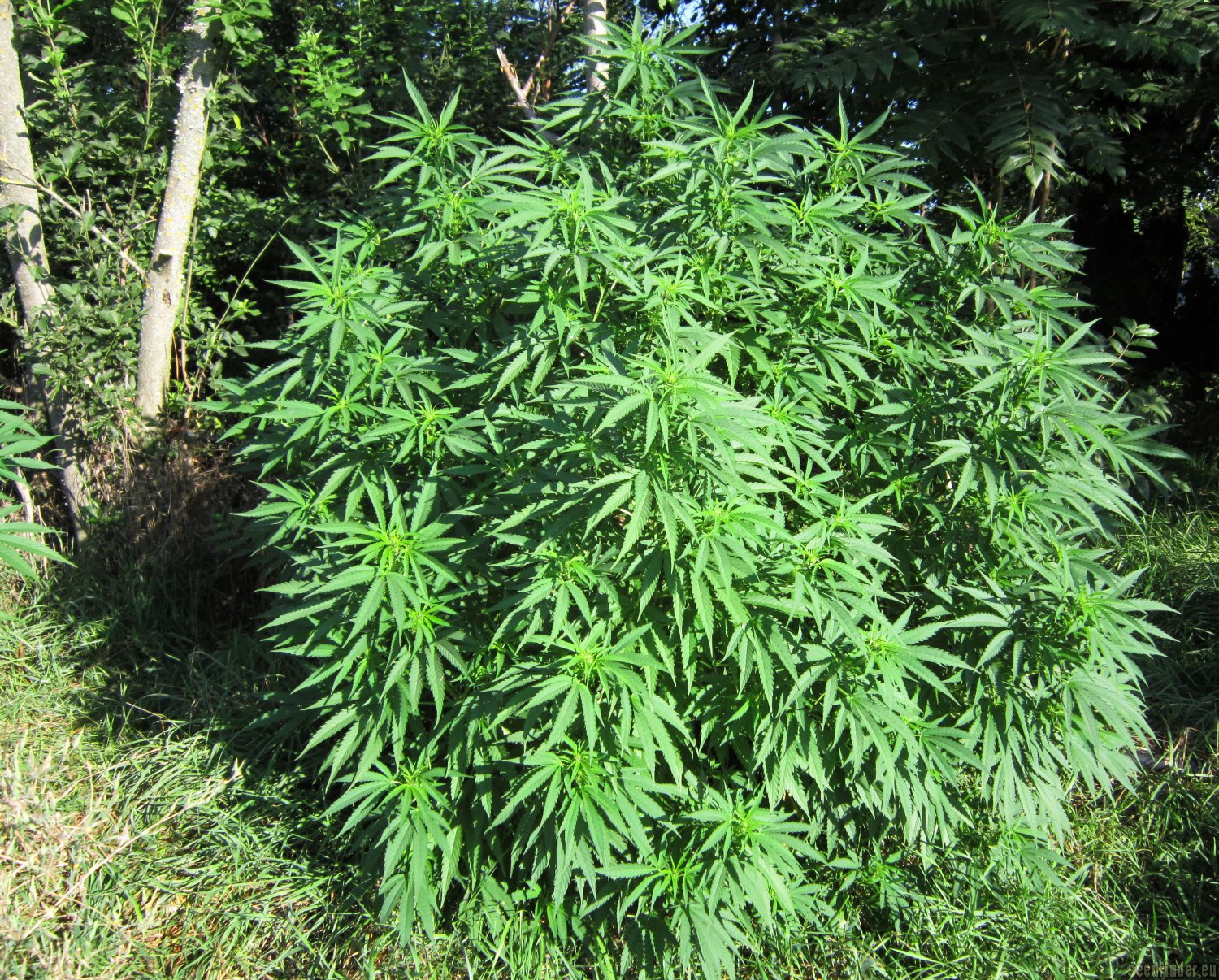
Cannabis cultivation and beneficial fungi
A healthy soil full of beneficial microorganisms provides great confidence to every grower. These small allies not only dramatically promote the development of our plants, but also protect them from many pathogens. Here we present some information about the soil microbial life, with particular attention to the role of beneficial fungi and their wonderful association with our plants.
Allelopathy, the Chemical Language Between Plants
Allelopathy is the phenomenon by which a plant releases biochemical compounds into its environment that influence the development of other plants or soil organisms, either positively or negatively. These compounds, known as allelochemicals, can be volatilised into the air by leaves and flowers, secreted by roots into the soil, or released during the decomposition of leaf litter.
The allelopathic properties of certain plants can reach an action radius of up to 10 metres, and all aromatic plants exert, to a greater or lesser extent, some positive influence on their neighbours — with the notable exception of fennel (Foeniculum vulgare), which should be avoided in any garden that includes cannabis. Fennel releases allelochemicals that inhibit the growth of most crops it grows alongside, making it one of the few plants that does not fit into polyculture systems.
Marigolds and Tagetes, the Reference Companion Plants
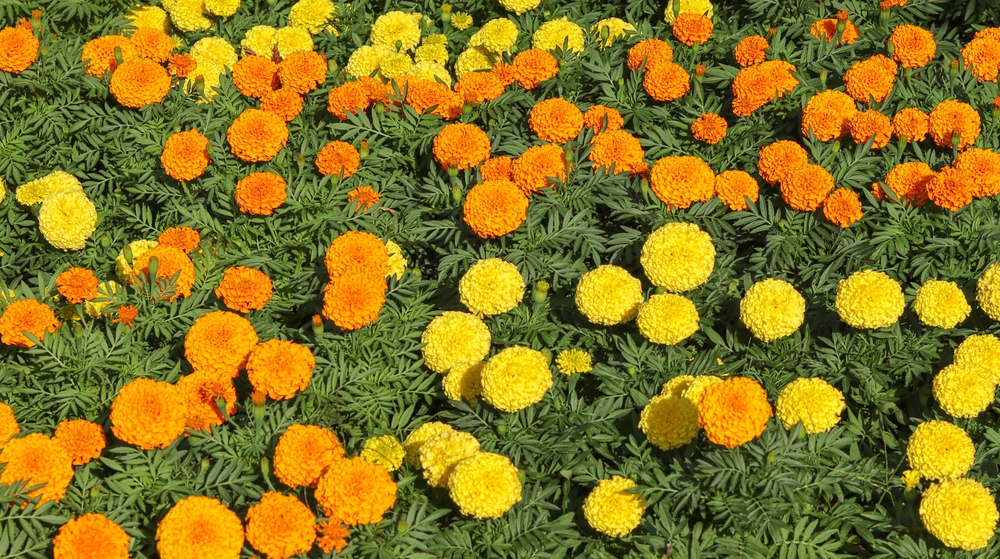
If there were a consensus among organic growers worldwide about which companion plant is most valuable for cannabis, the genus Tagetes and marigolds would top the list.
In the fight against nematodes, the nematicidal activity of Tagetes root extracts against several species of phytoparasitic nematodes has been demonstrated. Since then, dozens of publications have confirmed and expanded upon this finding. In a trial referenced in the classical scientific literature, a comparative experiment was carried out on Bulgarian soil with four crops: cucumber, tomato, cannabis and tagetes. After 30 days, cucumbers showed an average of 56 root galls per plant and 396 Meloidogyne larvae in the surrounding soil; tomatoes, 42 galls and 318 larvae; cannabis, 5 galls and 21 larvae; and tagetes, just 1 gall and no larvae — concluding that including these plants in crop rotation schemes can effectively cleanse the soil of nematodes.
Against whitefly, tagetes act through the emission of terpene volatile compounds, most notably limonene. Several studies demonstrated that growing alongside tagetes or marigolds protected tomato plants from greenhouse whitefly through the airborne emission of limonene — a strictly aerial mechanism that requires no physical contact between plants.
Nitrogen-Fixing Plants: Fertility from the Root
Nitrogen is the most in-demand macronutrient in cannabis cultivation during the vegetative phase. Its availability in the soil depends largely on microbial mineralisation cycles, but it can be sustainably increased by incorporating plants capable of forming symbioses with nitrogen-fixing bacteria.
Among the legumes with the greatest fixing potential and best adaptation to home growing spaces are white clover (Trifolium repens), red clover (T. pratense), alfalfa (Medicago sativa), peas (Pisum sativum), beans (Phaseolus vulgaris) and vetch (Vicia sativa).
Repellent and Odour-Masking Plants
Aromatic plants from the Lamiaceae and Apiaceae families are among the most widely used companions in cannabis cultivation, both for their pest-repelling properties and their ability to mask the characteristic smell of the main plant — of particular relevance in outdoor grows.
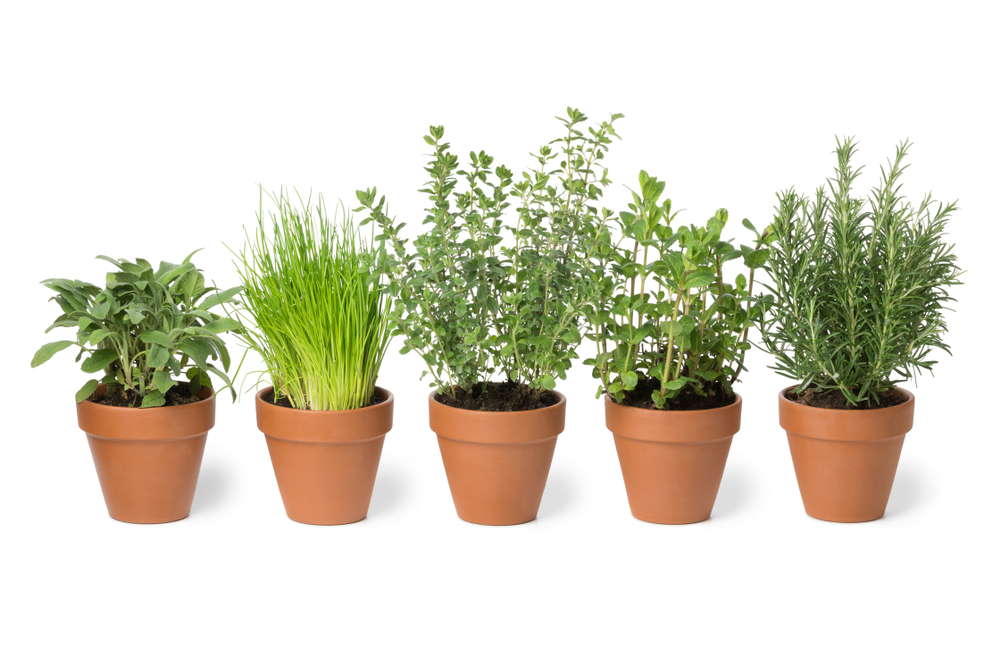
Mint (Mentha spp.) is perhaps the most cited example. Its terpene profile, dominated by menthol and menthone, actively repels aphids, stable flies, ants, cockroaches and certain fly species. Due to its aggressive spreading via rhizomes, it is best grown in separate containers placed around the perimeter of the grow. Mint also helps disguise the smell of cannabis outdoors, complementing its repellent function with a stealth function.
Rosemary (Salvia rosmarinus, formerly Rosmarinus officinalis) acts as a repellent against mites and aphids thanks to its essential oils rich in 1,8-cineole, camphor and α-pinene. Its shrubby habit and drought tolerance make it a long-lasting companion plant particularly useful in Mediterranean outdoor grows.
Lavender (Lavandula angustifolia) — its essential oils deter various pests while simultaneously attracting bees and other pollinators that benefit the garden as a whole (Cannabis Museum Amsterdam, 2024).
Basil (Ocimum basilicum) is another top-tier ally. Its eugenol and linalool content gives it repellent properties against aphids, whitefly, bedbugs and thrips.
Garlic (Allium sativum) and onion (Allium cepa) complement this repellent arsenal through their volatile sulphur compounds, which effectively deter aphids and mites.
Trap Plants: Strategic Attractants
A complementary strategy to repulsion is attraction: some plants are deliberately more appealing to certain pests than cannabis itself, acting as trap crops that concentrate pest pressure at a controlled point, making eradication easier. This is the role played by nasturtium (Tropaeolum majus): aphids of various species, whitefly and spider mite are attracted to it in preference to other species. By concentrating the pest in a specific location, the grower can intervene in a targeted and efficient manner without needing to treat the entire garden.
Tobacco has also been noted for its effectiveness as a whitefly trap: by attracting these insects towards itself, it facilitates their localised eradication and reduces pressure on the surrounding cannabis. However, its use requires caution, as it can also act as a reservoir for tobacco mosaic virus and other pathogens.
Plants that Attract Beneficial Insects
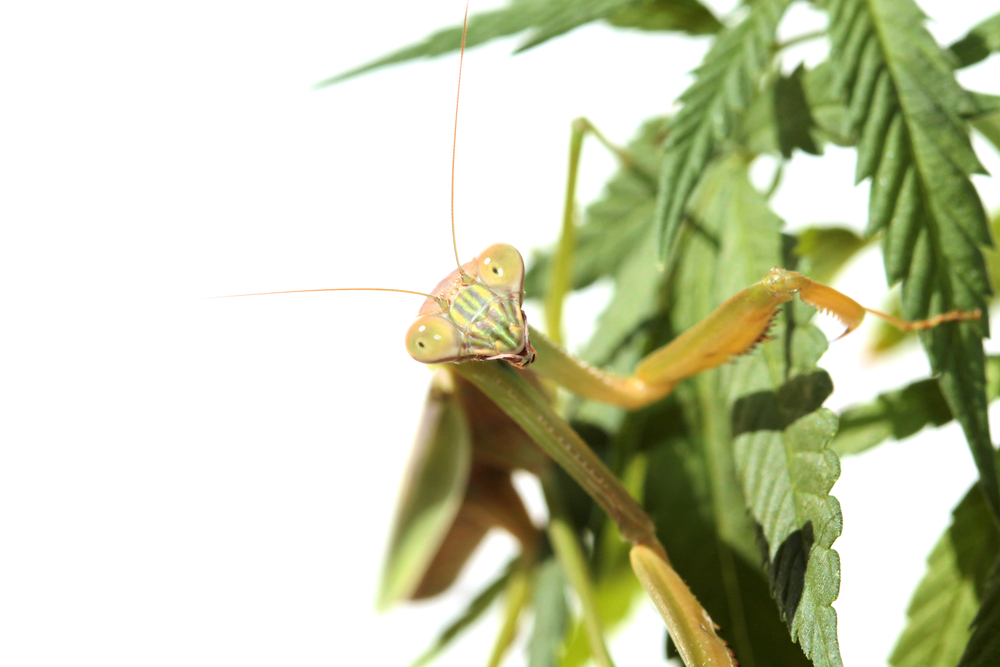
Companion plants with nectar- and pollen-rich flowers are essential for supporting beneficial insects, which generally require plant food sources to supplement their diet or complete their life cycle.
Dill highly effectively attracts parasitoid wasps, lacewings and hoverflies — all active predators of aphids, thrips and whiteflies. Coriander shares a similar profile, attracting ladybirds, butterflies and bees, while simultaneously repelling aphids and mites.
Chamomile serves multiple functions at once: it is a nitrogen source for the soil, attracts beneficial insects, repels nematodes and adds calcium and potassium to the soil as it decomposes. Sunflower acts as a tall plant that can serve as shelter for certain beneficial insect species and simultaneously act as a visual barrier concealing the main crop.
Comfrey deserves special mention. Its taproot can reach up to two metres in depth, drawing minerals and nutrients from the subsoil that are inaccessible to most crops. When its leaves are cut and placed on the surface, they act as a slow-release fertiliser particularly rich in potassium, calcium and boron. Boron is a critical micronutrient for the floral development of cannabis, and the presence of comfrey in the garden can contribute to its availability in a completely natural way.
As a general rule, biodiversity is always a benefit for our marijuana growing.
Ground Covers and Cover Crops
Covering bare soil is an essential practice in any organic system. Exposed soil rapidly loses moisture, suffers thermal fluctuations that harm the microbiota, is vulnerable to erosion from rain and irrigation water, and receives direct UV radiation that progressively degrades organic matter. Low-growing cover plants resolve this problem in an elegant and cost-effective way.
Snow-in-summer forms a dense, fast-growing carpet that retains soil moisture, protects edaphic microorganisms from UV radiation and actively competes with weeds for space and light. It tolerates a wide pH range and adapts well to full-sun positions — conditions very compatible with those of cannabis.
Dwarf white clover, which in addition to covering the soil also fixes nitrogen, is another widely used option as a living mulch beneath the main plants.
Plants to Avoid
Not all plants coexist well with marijuana. In addition to fennel already mentioned, others can prove problematic. Fennel shares a similar appearance to dill, which can lead to confusion, but its effects on neighbouring plants are radically opposite.
While dill is beneficial when young, fennel produces allelochemicals that inhibit the growth of the vast majority of horticultural and ornamental species it grows alongside.
Tomato is a notable exception: it coexists well with fennel and is compatible with marijuana in terms of environmental requirements, though it has no specific repellent effects; in fact, it acts more as a trap plant for spider mite, attracting these phytophagous mites and drawing them away from our cannabis crop.
Practical Implementation: Indoor Growing, Outdoor Growing.
The application of these strategies varies significantly depending on the growing system.
Outdoors, the possibilities are almost unlimited: the grower has space to create perimeter belts of repellent plants, intercrop nitrogen-fixing legumes between cannabis plants, establish patches of flowers that attract beneficial insects, and use living mulches in the spaces between plants. The goal is to replicate the structure of a semi-natural ecosystem in which cannabis is the protagonist species but not the only one. At Philosopher Seeds you will find the right plants for outdoor growing.
Indoors, options are more restricted by available space, but they are not non-existent. Compact aromatic plants such as basil, coriander, potted mint or small marigold or tagetes plants can coexist under the same grow light as the cannabis, providing their benefits within the growing space. You can find information on indoor marijuana growing on our blog.
Synergies Between Companions.
The most sophisticated approach to companion planting does not consist of adding one or two repellent plants around the perimeter of our cannabis grow, but rather deliberately designing a functional system in which every species present contributes to the balance of the whole.
A functional polyculture design for our cannabis grow could combine, for example: an outer ring of marigolds or tagetes against nematodes and whitefly; an intermediate ring of rosemary and lavender as an aromatic repellent barrier; intercropped dill and coriander plants to attract natural predators; white clover as a living nitrogen-fixing cover between plants; comfrey at the edges to accumulate nutrients and provide potassium and calcium to the soil; and mint in strategically placed containers to reinforce odour masking.
Considerations on Pesticide Use in the Presence of Companion Plants
One of the most frequently overlooked benefits of companion planting in marijuana growing is its functional incompatibility with synthetic pesticides. The use of synthetic chemical insecticides or fungicides does not discriminate between pests, pathogens, beneficial insects and soil microorganisms — it destroys the entire biological framework built up through companion planting, including mycorrhizal fungi and bacteria. We must therefore avoid them without question.
Synthetic fertilisers and pesticides can completely destroy the bacterial and fungal ecosystem of the rhizosphere, with effects that can persist for decades before the soil recovers its natural diversity and functionality. Adopting companion planting necessarily means committing to an organic and integrated pest management approach in which synthetic inputs are relegated to a last resort or eliminated entirely.
References
Arvensis Agro (2022). Nitrogen-fixing bacteria.
Cannabis Industry Institute (2016). Companion planting and cannabis.
Cannabis Workforce Initiative (2023). Companion planting benefits for cannabis.
Chatzistathis, T. et al. (2021). Effect of Rhizophagus irregularis on growth and quality of Cannabis sativa seedlings. PMC/PubMed Central. PMC8309143.
Conboy, N.J.A. et al. (2019). Companion planting with French marigolds protects tomato plants from glasshouse whiteflies through the emission of airborne limonene. PLOS ONE, 14(3): e0213071. DOI: 10.1371/journal.pone.0213071
EOS (2024). Biological nitrogen fixation: benefits of its use.
Gilles, M. et al. (2020). Insecticidal activity of marigold Tagetes patula plants and foliar extracts against Lygus hesperus and Bemisia tabaci. PLOS ONE. PMC7237031. DOI: 10.1371/journal.pone.0233511
Hamaguchi, T. et al. (2019). Nematicidal actions of the marigold exudate α-terthienyl. Biology Open, 8(4): bio038646. DOI: 10.1242/bio.038646
Ideagro (2022). Nitrogen-fixing bacteria in agriculture.
Israel Agricultural Technology Hub / Keshet, T. et al. The benefits of incorporating mycorrhizal fungi in cannabis cultivation.
DRUGLIBRARY (1997). Cannabis as repellent and pesticide.
Nacoon, S. et al. (2022). Enhancement of growth and cannabinoids content of hemp (Cannabis sativa) using arbuscular mycorrhizal fungi. Frontiers in Plant Science. PMC9360772. DOI: 10.3389/fpls.2022.845794
Pagnani, G. et al. (2018). Plant growth-promoting rhizobacteria (PGPR) in Cannabis sativa 'Finola' cultivation: an alternative fertilization strategy to improve plant growth and quality characteristics. Industrial Crops and Products. DOI: 10.1016/j.indcrop.2018.07.029
Project CBD (2023). Companion plants for cannabis. Handout.
Root, R.B. (1973). Organization of a plant-arthropod association in simple and diverse habitats: the fauna of collards (Brassica oleracea). Ecological Monographs, 43(1): 95–124.
Spatafora, J.W. et al. (2016). A phylum-level phylogenetic classification of zygomycete fungi based on genome-scale data. Mycologia, 108: 1028–1046. DOI: 10.3852/16-042
Varandas da Silva, M.V. et al. (2018). Tagetes spp. essential oils and other extracts: chemical characterization and biological activity. Molecules / PMC. PMC6278309.
Viudes, G. et al. (2025). Altered behavioural response of whitefly (Bemisia tabaci) on tomato associated with biocontrol plants. PubMed. DOI: published in PubMed 2025, PMID: 41051420
Zunino, M.P. et al. (2009). Allelopathic potential of Tagetes minuta terpenes by a chemical, anatomical and phytotoxic approach. Biochemical Systematics and Ecology. DOI: 10.1016/j.bse.2008.09.006