Overfertilization and cannabis
In cannabis cultivation, mineral nutrition is one of the factors that most decisively determines the quality and quantity of the harvest. However, one of the most common mistakes among growers of all experience levels is supplying nutrients in excess, under the premise that more fertilizer equals more production.
The available scientific evidence demonstrates that this premise is not only wrong, but that it can have profound consequences on the plant's physiology, cannabinoid and terpene production, and even the viability of the crop.
What is overfertilization?
Overfertilization occurs when the plant receives a quantity of nutrients greater than it can absorb and metabolize. This excess causes an accumulation of mineral salts in the substrate that interferes with water absorption and creates conditions the plant perceives as stress.
According to recent research, cannabis exhibits what is known as luxury consumption for numerous nutrients, including magnesium (Mg) and phosphorus (P), meaning that when the supply exceeds actual needs, the plant continues to accumulate these elements in leaf tissues without this translating into greater growth or higher flower production.
The most common causes of overfertilization can be grouped into three main categories. The first is the application of excessive doses of synthetic fertilizers, the second is a lack of attention to the pH and electrical conductivity (EC) of the substrate. The third is the use of pre-fertilized substrates combined with the addition of extra nutrients.
Physiological mechanisms of the cannabis plant
When the salt concentration in the substrate exceeds the threshold tolerable by the roots, the phenomenon known as nutrient lockout occurs. Paradoxically, even though the substrate is saturated with nutrients, the plant is unable to absorb them because the osmotic process reverses: instead of water flowing into the root, the movement occurs in the opposite direction. The result is a situation that can visually be confused with a deficiency, when in reality the underlying problem is toxicity from excess.
Damage to the root system constitutes another critical vector of deterioration. Roots subjected to a nutrient overload show structural alterations that reduce their absorption capacity and, in severe cases, promote the onset of root rot, a condition that can irreversibly compromise the plant if not detected in time.
How to identify nutrient excess
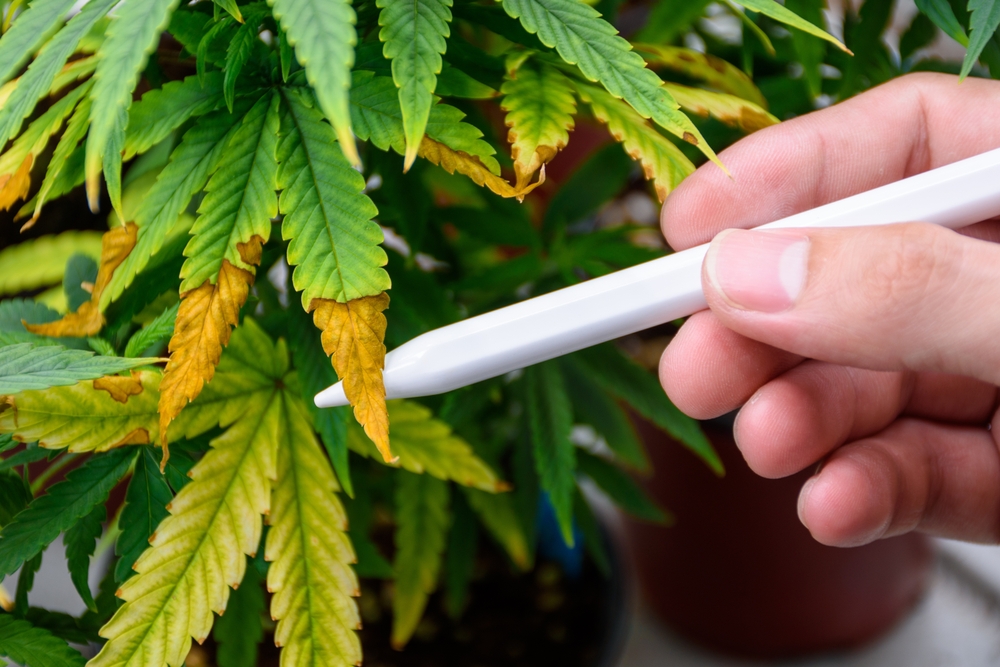
The first visible symptom of overfertilization is tip burn, which manifests as the yellowing and subsequent browning of leaf tips, especially at the ends of the leaflets. This symptom is the most superficial and acute expression of toxicity, and usually appears after the sudden application of synthetic fertilizers.
As the problem progresses, leaves develop a very dark, glossy green coloration accompanied by a thickened appearance, a sign that the plant is accumulating excess nitrogen in the leaf tissues.
A particularly visible symptom of nitrogen excess is known as "clawing": leaves curl downward in a characteristic way and the leaflets arch.
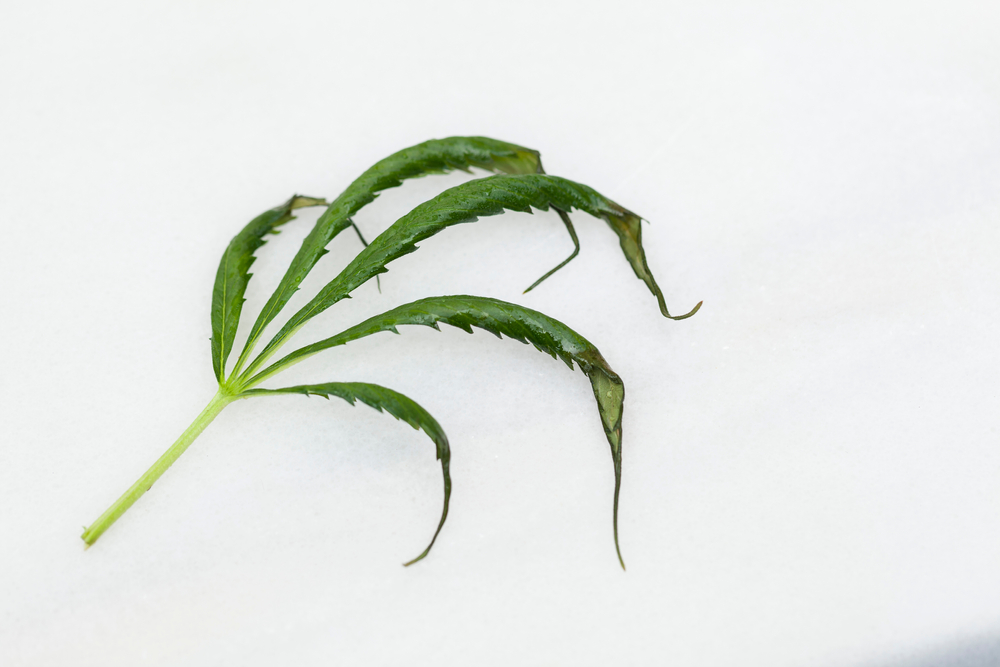
During flowering, symptoms of nitrogen overfertilization include the appearance of sugar leaves, typically green inside the buds, a high number of secondary branches, and a slowdown or even halt of the flowering process. The plant may show signs of partial rejuvenation, such as the production of small leaves in areas that had already begun floral development. This phenomenon is particularly significant because the final buds turn out smaller and less compact.
Phosphorus overfertilization takes longer to manifest visually, as cannabis tolerates considerably high concentrations of this element before showing explicit symptoms. Excess potassium, for its part, can masquerade as symptoms similar to deficiencies of magnesium, manganese, zinc, or iron.
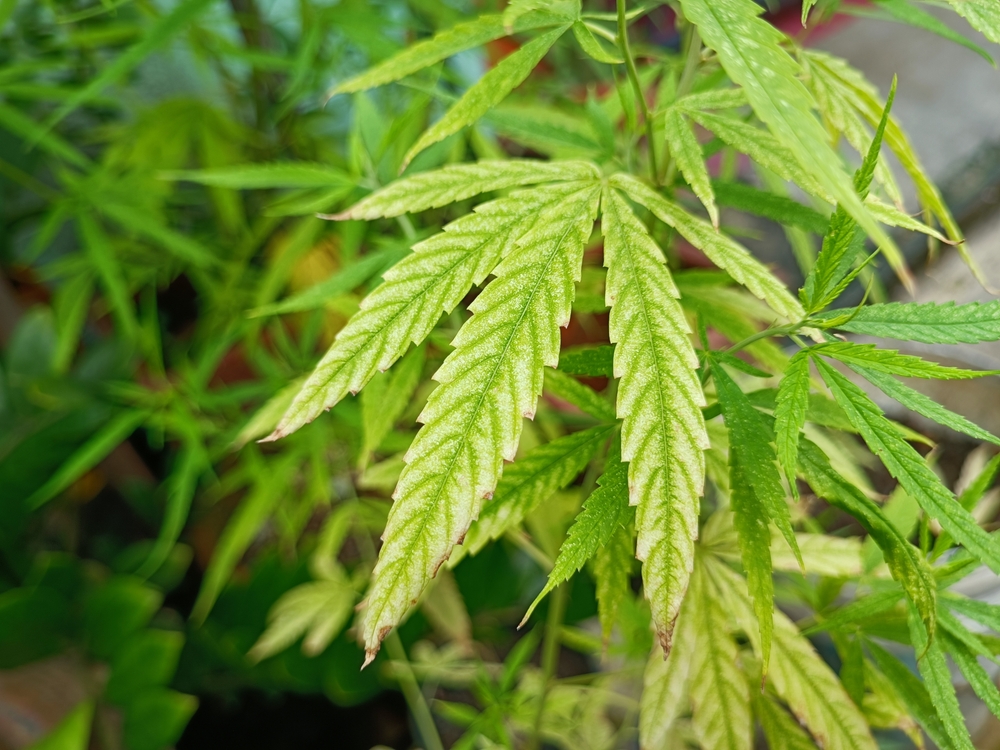
Zinc excess is among the most acutely toxic: it produces widespread soft chlorosis and can compromise the viability of the plant relatively quickly. Excess molybdenum indirectly induces copper and zinc deficiencies by competing for the same root absorption sites.
The impact on cannabinoids and terpenes.
One of the most relevant findings of recent cannabis research is the effect that nutrient concentration, and specifically nitrogen, has on cannabinoid synthesis. A study evaluated five levels of nitrogen supply (30, 80, 160, 240, and 320 mg/L) during the flowering phase under controlled conditions.
The results showed that THCA and CBDA concentrations decreased by 69% and 63% respectively as nitrogen supply increased from 30 to 320 mg/L. The metabolic explanation for this phenomenon was developed in greater depth in a subsequent publication by the same group. Excess nitrogen stimulates the production of nitrogen-rich compounds (amino acids, proteins, chlorophyll), which compete for available carbon.
Other research also demonstrated that there is no increase in bud weight or yield when phosphorus supply exceeds 15 ppm, even though the foliar tissue concentration of phosphorus does increase with dose. Similarly, for magnesium, a rate above 50–75 ppm produced no increases in growth or cannabinoid concentration.
The role of pH and EC.
Substrate pH is the parameter that determines the availability of each nutrient in the soil solution. Outside the optimal range, certain ions precipitate or remain immobilized in non-assimilable forms, which may lead the grower to increase the fertilizer dose by interpreting the resulting symptoms as a deficiency, when in reality the substrate is already overloaded with salts.
Recent research establishes an optimal pH range in substrate of between 5.8 and 6.2, although cannabis shows relatively broad tolerance to micronutrient toxicity under low pH conditions, unlike other horticultural species.
Electrical conductivity (EC) measures the total concentration of dissolved salts in the nutrient solution and is the most direct indicator of overfertilization risk. Recommended EC ranges vary according to the growth phase and substrate used, but as a general reference values of 1.2 to 1.8 mS/cm are accepted during vegetation and 1.6 to 2.4 mS/cm during the early flowering phase, reaching up to 2.8 to 3.2 mS/cm in high-demand varieties during peak flowering.
Periodic measurement of drainage EC is particularly informative: if the drainage EC exceeds the inlet solution EC by more than 0.5–0.7 mS/cm, it is a sign of salt accumulation in the root zone.
Synthetic fertilizers vs. organic fertilizers.
Synthetic mineral fertilizers present the highest risk of overfertilization for two fundamental reasons. First, they are in ionic forms that are directly assimilable and absorbed by roots almost immediately, with no temporal buffering whatsoever.
Second, they do not stimulate the microbiological activity of the substrate nor do they provide organic matter to modulate nutrient availability. Any dosing error manifests quickly and can cause acute damage.
Organic fertilizers, on the other hand, release nutrients gradually through the activity of bacteria and fungi that mineralize organic matter, which acts as a natural regulator and drastically reduces the risk of acute toxicity. A recently published study on the effects of organic and mineral fertilization levels on yield and nutrient use efficiency in cannabis found that NH4+ toxicity only manifested visually at the highest doses of organic fertilizer, and that the highest CBD concentration was associated with manure-based compost treatments.
Nevertheless, organic fertilizers show lower nutrient use efficiency because part of the mineralization occurs at times that do not necessarily coincide with the plant's peak demand periods, and their precise dosing is more difficult.
Flushing
When symptoms of overfertilization have been identified, the immediate intervention is to suspend fertilization and perform a deep flush of the substrate with pH-adjusted water. The physical principle of flushing is leaching.
For the flush to be effective, it is recommended to apply a volume of water equivalent to three times the container capacity: for example, an 11-liter container would require approximately 33 liters of water at a pH of 6.0. An important technical note is that in inert substrates such as coco coir, flushing with pure water is not recommended without any nutrient input.
The recommended practice in these media is to use a diluted solution (approximately 20–25% of the usual flowering EC) at a stable pH, repeating applications until the drainage EC approaches that of the flushing solution. After the process, the substrate must partially dry out before resuming normal fertilization.
It is important to distinguish the corrective flush, which addresses a salt accumulation problem and can be carried out at any point in the cycle, from the pre-harvest flush, which some growers practice in the final weeks of flowering to reduce the salt load in the tissues and improve the organoleptic profile of the final product.
Prevention strategies.
Preventing overfertilization requires integrating several practices systematically. The first and most effective is to always start with doses lower than those recommended by manufacturers (between 50 and 75% of the indicated dose) and increase them gradually only when the plant's visual response justifies it.
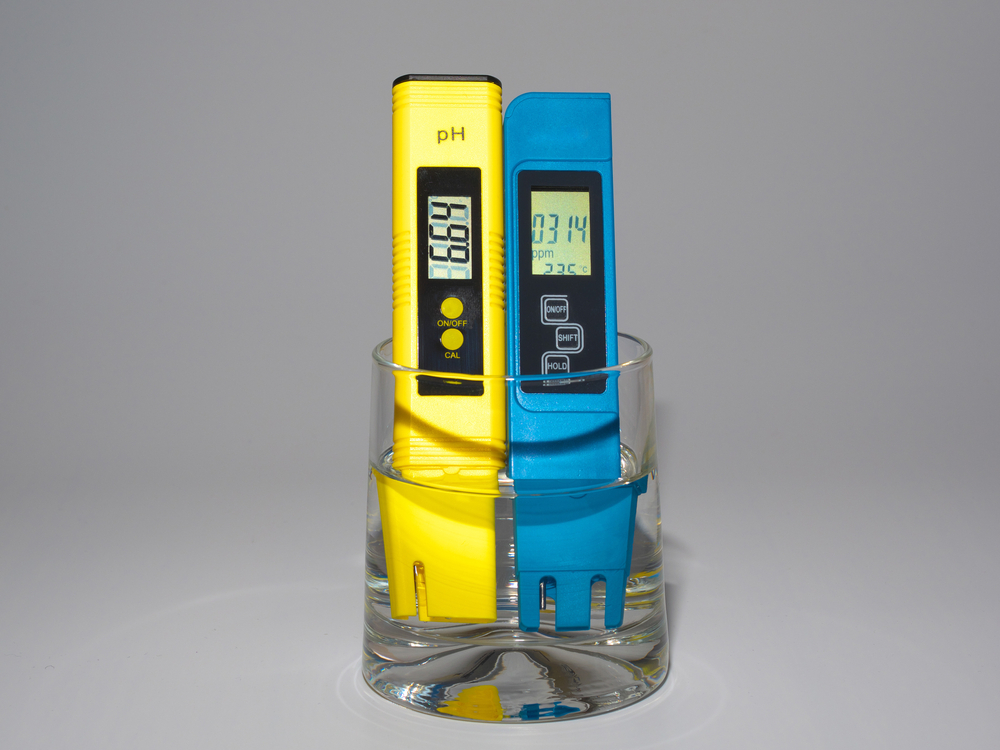
The second essential practice is the periodic and systematic measurement of pH and EC, both of the input solution and the drainage. These two parameters provide a real-time picture of the nutritional state of the substrate and allow accumulation trends to be detected before visual symptoms appear.
An aspect that is often underestimated is the quality of the starting water. If the irrigation water already has a high EC (above 0.5–1.0 mS/cm) due to its dissolved mineral content, the addition of extra fertilizers can quickly exceed the toxicity threshold even when seemingly moderate doses are applied. Always measuring the EC of the starting water and subtracting it from the EC of the prepared nutrient solution is an indispensable preliminary step for any dosing calculation.
Finally, choosing varieties with greater EC tolerance can be relevant in intensive cultivation contexts. In general, indica-dominant genetics show greater tolerance to high nutrient concentrations than sativa-dominant ones, which tend to be more sensitive to overfertilization and require more conservative nutritional programs.
References
Saloner, A. & Bernstein, N. (2021). Nitrogen supply affects cannabinoid and terpenoid profile in medical cannabis (Cannabis sativa L.). Industrial Crops and Products, 167, 113516.
Saloner, A. & Bernstein, N. (2022). Nitrogen source matters: high NH4/NO3 ratio reduces cannabinoids, terpenoids, and yield in medical cannabis. Frontiers in Plant Science, 13, 830224.
Saloner, A. & Bernstein, N. (2023). Nitrogen deficiency stimulates cannabinoid biosynthesis in medical cannabis plants by inducing a metabolic shift towards production of low-N metabolites. Industrial Crops and Products.
Bernstein, N. et al. (2020). Response of medical cannabis (Cannabis sativa L.) to nitrogen supply under long photoperiod. Frontiers in Plant Science, 11, 572293.
Cockson, P., Landis, H., Smith, T., Hicks, K. & Whipker, B. E. (2019). Characterization of nutrient disorders of Cannabis sativa. Applied Sciences, 9(20), 4432.
Westmoreland, F. M. et al. (2023). When less is more: the harms of overfertilizing your cannabis plants. Cannabis Business Times. Based on research from NCSU (Cockson et al., 2020; Veazie et al., 2021; Shiponi & Bernstein, 2021).
Frontiers in Plant Science (2023). Cannabis hunger games: nutrient stress induction in flowering stage – impact of organic and mineral fertilizer levels on biomass, CBD yield and nutrient use efficiency. Frontiers in Plant Science, 14, 1233232.
Veazie, P. et al. (2025). Impact of substrate pH and micronutrient fertility rates on Cannabis sativa. Agrosystems, Geosciences & Environment.
Llewellyn, D. et al. (2025). Optimal nitrogen rates and clonal effects on cannabinoid yields of medicinal cannabis. Scientific Reports.