The Super Cropping Technique in Marijuana Cultivation
List of contents
- What Supercropping aims for and why it works
- When to apply Super cropping
- Which branches to choose
- How to Super crop step by step
- What to expect afterwards
- Post-technique care
- Common supercropping mistakes and how to avoid them
- Super cropping vs other techniques
- When it’s worth it (and when it isn’t)
- References consulted
The Super cropping technique (also called “super crop” within High Stress Training or HST) consists of crushing and bending a branch in a controlled way to partially “interrupt” its internal tissues without actually snapping it. The goal isn’t to cause damage for the sake of it, but to improve the plant’s structure in order to achieve a more even canopy, better light distribution, and branches that are more capable of supporting heavy flowers.
What Supercropping aims for and why it works
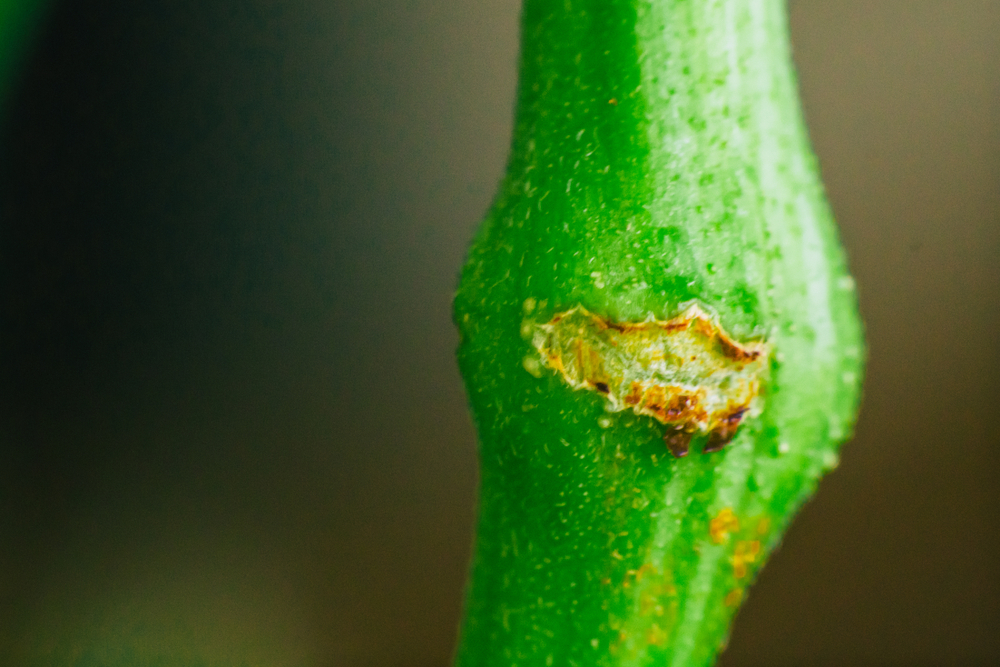
When you bend a branch past its breaking point (without tearing the outer skin), the plant triggers a repair response: it reinforces the “knot” (callus), redirects growth toward side branches, and tends to stabilize its structure. In practice, this translates into less apical dominance, better height control, and a flatter canopy—key indoors when light is limited and comes from above.
The physiological explanation matches what is known about plant responses to mechanical stimuli (thigmomorphogenesis): bending or mild damage can change growth patterns and strengthen tissues through hormonal and defense signals. In cannabis, growers use this principle in a targeted way to achieve a more productive structure without resorting to cutting.
When to apply Super cropping
The safest time is usually the vegetative stage or, at most, the early flowering stage (when there’s still time to recover).
In late flowering the risk increases: branches become more rigid, breakage is more likely, and recovery is slower, which can affect production. HST-focused grow guides agree that the plant should be vigorous and free of prior stress before applying high-stress techniques.
This technique is very suitable for long-flowering sativa plants.
Which branches to choose
Supercropping is mainly used to control dominant tops that shoot upward and disrupt canopy uniformity.
It can also be applied to “open up” the plant and improve light penetration and airflow in inner areas, reducing microclimates that encourage fungal issues. The idea is to correct the plant’s architecture, not to “train everything just because.”
How to Super crop step by step
1) Choose the spot. Look for a section of the branch stem that is still flexible. A mid-height section of the main branch or a very dominant secondary branch often works well, leaving enough structure and leaves above to keep photosynthesizing.
2) Soften the tissue. Using your fingers (thumb and index finger), gently “roll” the stem while applying gradual pressure for a few seconds. The goal is to feel the inside give and become pliable without tearing the outer skin.
3) Bend and position. Once softened, slowly bend the branch until the top is positioned more horizontally or level with the canopy. If done correctly, the branch will droop but won’t be split.
4) Secure if needed. If the branch is unstable or likely to spring back up due to tension, secure it with a soft tie or stake. This isn’t “pure LST,” but it helps maintain the angle during recovery.
What to expect afterwards
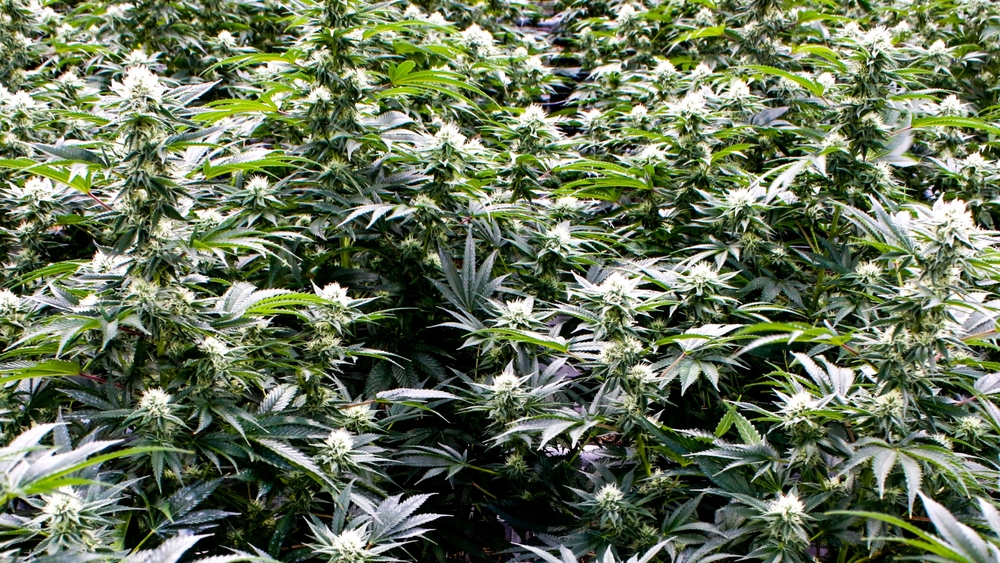
Within 24–72 hours, many plants show reorientation of the top toward the light, while the “knot” strengthens. This thickening (callus formation) is the typical sign of repair.
If the plant was healthy, recovery is usually quick and the canopy becomes more even.
Post-technique care
After supercropping, it’s best to avoid “stacking” more stress on the same day—so avoid transplants, heavy pruning, or aggressive changes to feeding.
Maintain proper watering and a stable climate, and make sure there are no open wounds. With high-stress techniques, hygiene and a clean environment reduce the risk of opportunistic infections.
Common supercropping mistakes and how to avoid them
The most common mistake is applying too much force and snapping the branch. If that happens, you can stake and secure it to encourage tissue bridging, but the goal of Supercropping is precisely to avoid that break.
Another possible mistake is doing it on already stressed plants (severe deficiencies, excessive EC, pests, cold, heat), because recovery will be more difficult.
Super cropping vs other techniques
Supercropping differs from topping or apical pruning in that it doesn’t remove the apex: it changes the growth direction and response through mechanical stimulus.
It also differs from classic LST (Low Stress Training) in that here there’s a component of high stress and tissue repair. Many guides recommend mastering LST first and then moving on to HST (High Stress Training) when more aggressive canopy control is needed.
When it’s worth it (and when it isn’t)
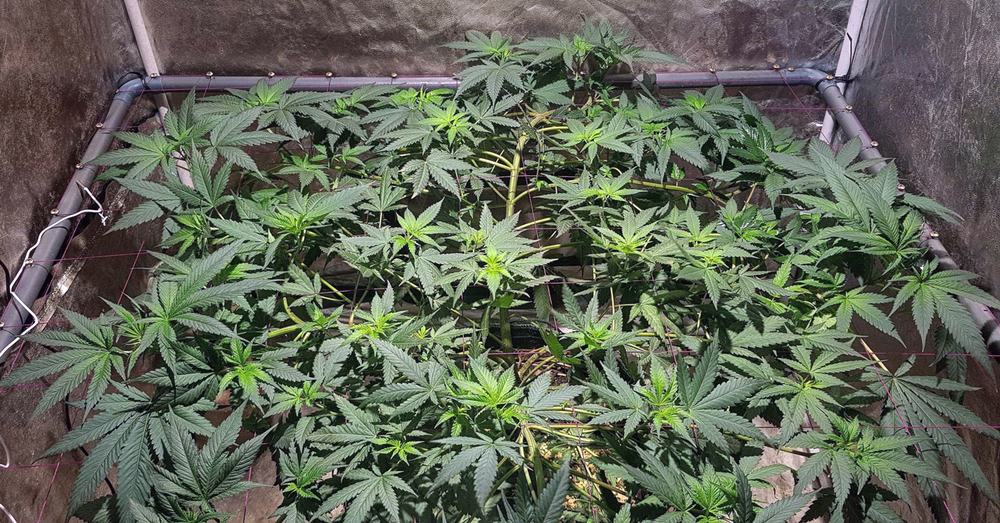
Supercropping shines when you need to level the canopy indoors, tame very vigorous phenotypes, or strengthen branches that will carry heavy flowers.
It isn’t essential in every grow: if you already have a uniform canopy with LST, SCROG (Screen of green) nets, or well-planned pruning, it may not add much and will only increase risk. The technique is a tool, not a requirement.
References consulted
- Ed Rosenthal explains Super cropping as training dominant branches to improve light exposure and flower size.
- Journal of Experimental Botany and related reviews describe plant responses to mechanical stimuli (thigmomorphogenesis) and their relationship with hormones and structural changes.
- Frontiers in Plant Science reviews concepts of apical dominance and the role of auxin in inhibiting/activating lateral shoots, a useful physiological basis for understanding why redistributing growth changes plant architecture.