List of contents
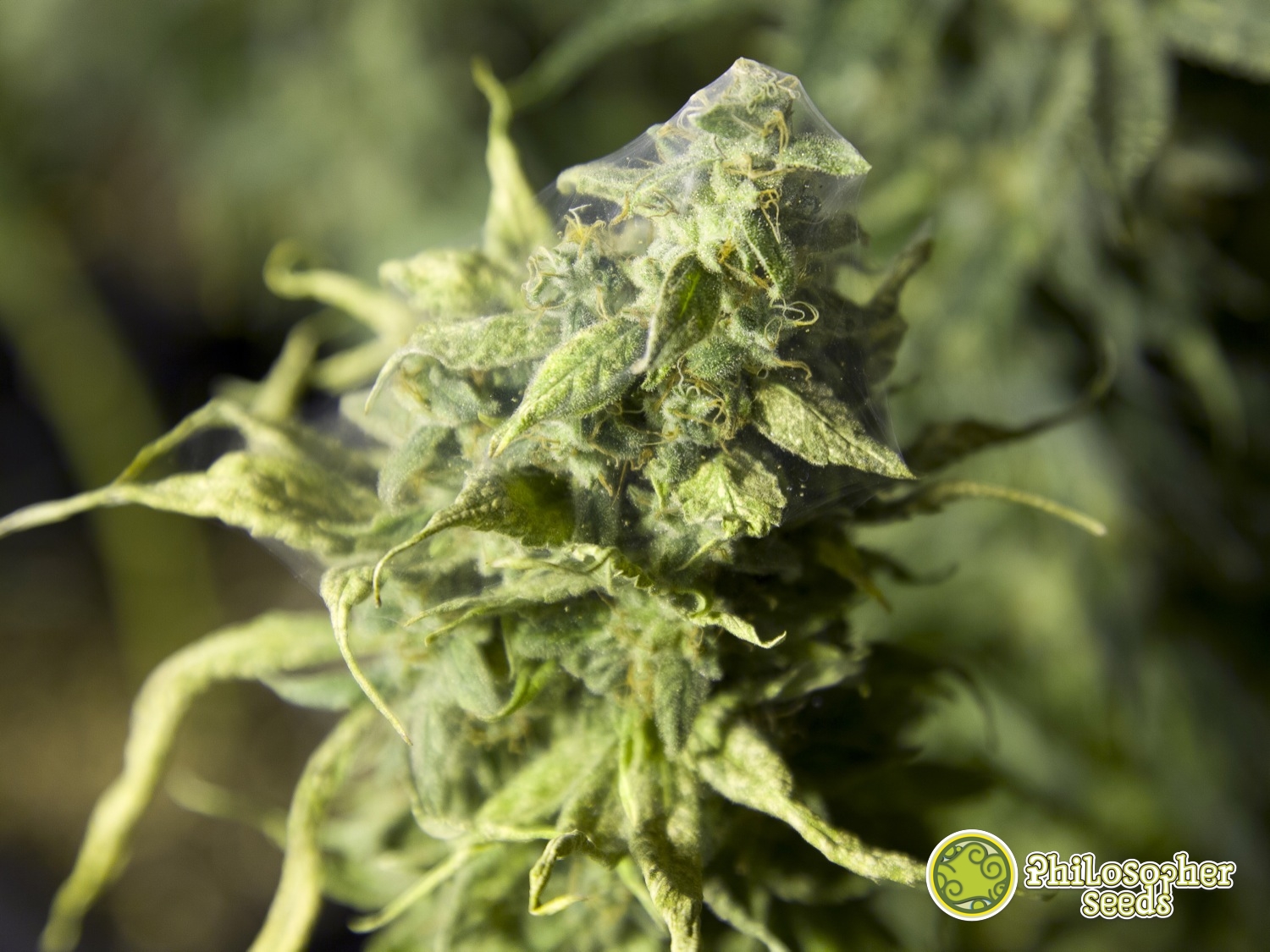
Powdery Mildew ia a fungal disease which mainly attacks plant leaves. There are many species that can be attacked by Powdery Mildew, such as roses, carnations, tomatos, strawberries, cucurbits, apple trees, plum trees and, of course, cannabis. It can be devastating for marijuana if not treated early, since it reaches the buds and ruins its flavour. 
How to identify a powdery mildew infection in cannabis
Detecting this pest is easy, since we'll quickly notice the growth of white powder stains with cotton like texture on the surface of the largest leaves (formed by the mycelium). These stains are small at first, but if growth conditions are optimal and the infection is not treated they'll soon cover most of the leaves, even the small sugar leaves of the buds.
At the end of this post you'll find a picture gallery that will make the identification of powdery mildew much easier. 
Prevention of powdery mildew in cannabis plants
First, we should always make sure that our cuttings or seedlings are healthy and free from pests. While this is forgotten most times, it is really important if we want a quality crop. Almost any pest will ruin our product if not treated early and properly. If we are growing indoors, our growing space should be clean and free from dead plant matter, etc. Humidity levels between 40 and 65% and proper ventilation are very important. Do not wet the leaves unless it's strictly necessary. If we know that there's powdery mildew in our area, using spore-proof filters - HEPA - in our ventilation system greatly reduces the possibilities of an infection inside our grow, as well as removing the lower branches and using some type of fungicide regularly (never spray your plants after the first 2 weeks into bloom).

- Fruity Jack / Jack El Frutero
- Amnesika 2.0
- Early Maroc
- Easy Haze / K-13 Haze
- Sweet Love
- Spicy CBD / Superjuani
Treating powdery mildew in cannabis plants
Once the plant is infected, natural fungicides are not very useful, so we'll have to use systemic fungicides- much more effective - like penconazole (always follow the instructions and respect the safety deadline of the product). Whenever possible, we should adjust the climate conditions of our grow for not favouring any infection. During the growth phase, we can use horsetail, propolis, potassium soap or sulphur as preventives, also to treat the first symptoms of an infection. As we mentioned, we can also use systemic fungicides, which remain in the plant tissues and protect it for several weeks. Many growers use this type of fungicides right before switching to bloom, so that plants will be protected during the first weeks of this crucial stage. In this way, they greatly reduce the chances of major infections.